System Design
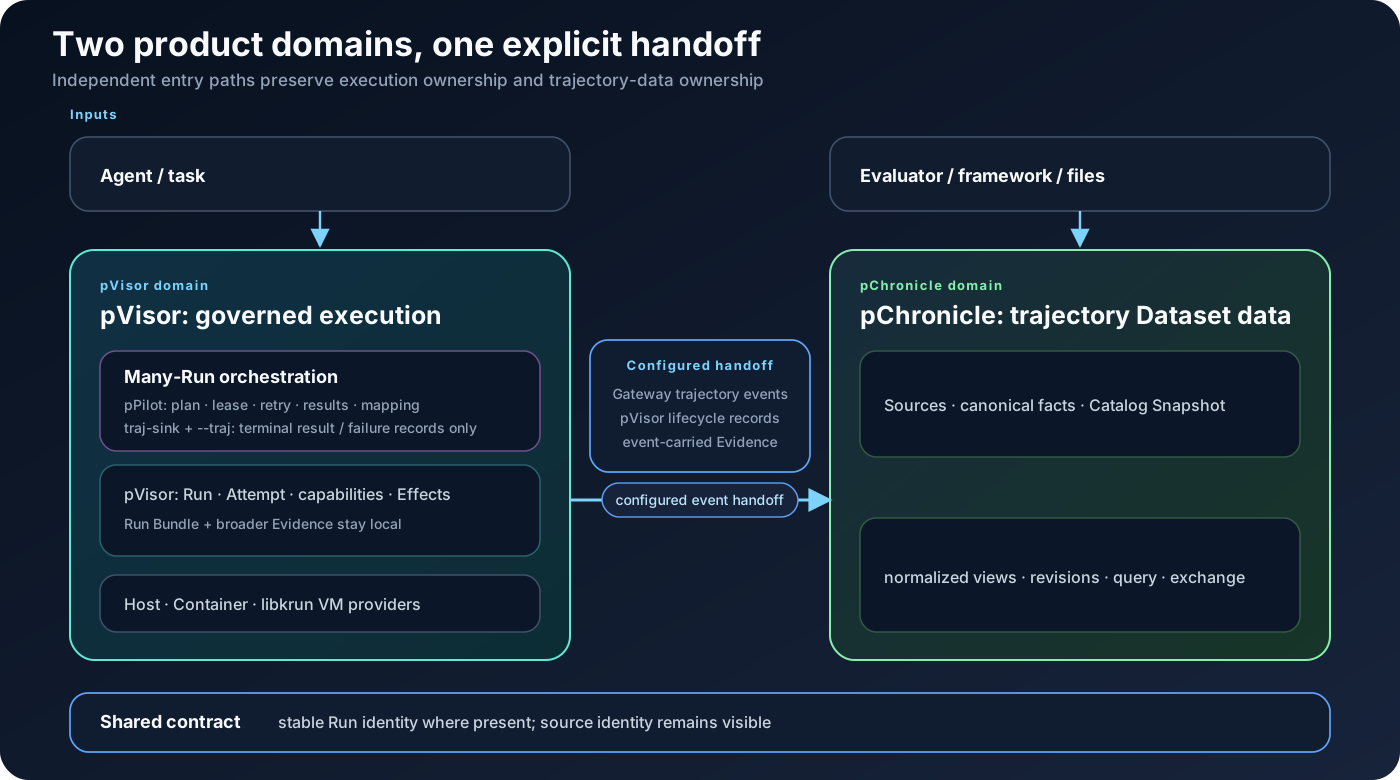
Persisting has two primary product domains:
- pVisor virtualizes and governs Agent execution;
- pChronicle organizes durable trajectory Sources into queryable Datasets.
pPilot extends pVisor from one Run to many. Gateway, OverlayFS, and OverlayNet are pVisor runtime mechanisms. Where available, stable Run identity connects the domains, but each also has a standalone entry path.
Cross-product contract
Configured pVisor capture
  Gateway trajectory events ─┐
  pVisor lifecycle records ──┴─> canonical event Source ─┐
Pinned external Sources                                  │
  ATIF / ACTF / OpenAI Messages / Storyline ─────────────┴─> Catalog Snapshot
                                                               └─> normalized Dataset views
Attempt finalization writes a private, versioned Run Bundle and leaves Effects staged for later review/apply/drop without pChronicle. Configured capture sends Gateway trajectory events and pVisor lifecycle records, including the Evidence those records carry. The full Bundle and its Artifact, lineage, Effect, and broader Evidence inventory remain local unless moved separately.
External file and Storyline Sources are pinned and normalized directly without passing through pVisor or becoming canonical events. Each path retains source-specific guarantees; ingestion does not add Evidence that its Source did not provide.
| Concern | Owner |
|---|---|
| One Run's execution boundary | pVisor |
| Planning and recovery of many Runs | pPilot |
| Model, network, and filesystem runtime drivers | pVisor |
| Canonical events, terminal facts, and Dataset history | pChronicle |
| Query, exchange, and revision lineage | pChronicle |
Continue by question
- Complete architecture and target model
- Local-to-fleet continuity
- Security and evidence model
- pVisor implementation boundaries
- pChronicle implementation boundaries
Delivery state is reported in the product Design pages and Project Engineering Notes. Target architecture is not evidence that a capability is implemented.