Architecture
DLSlime is organized around PeerAgent. Application services attach to PeerAgent, NanoCtrl provides service governance and coordination metadata, and endpoint APIs drive the underlying transfer engines and devices.
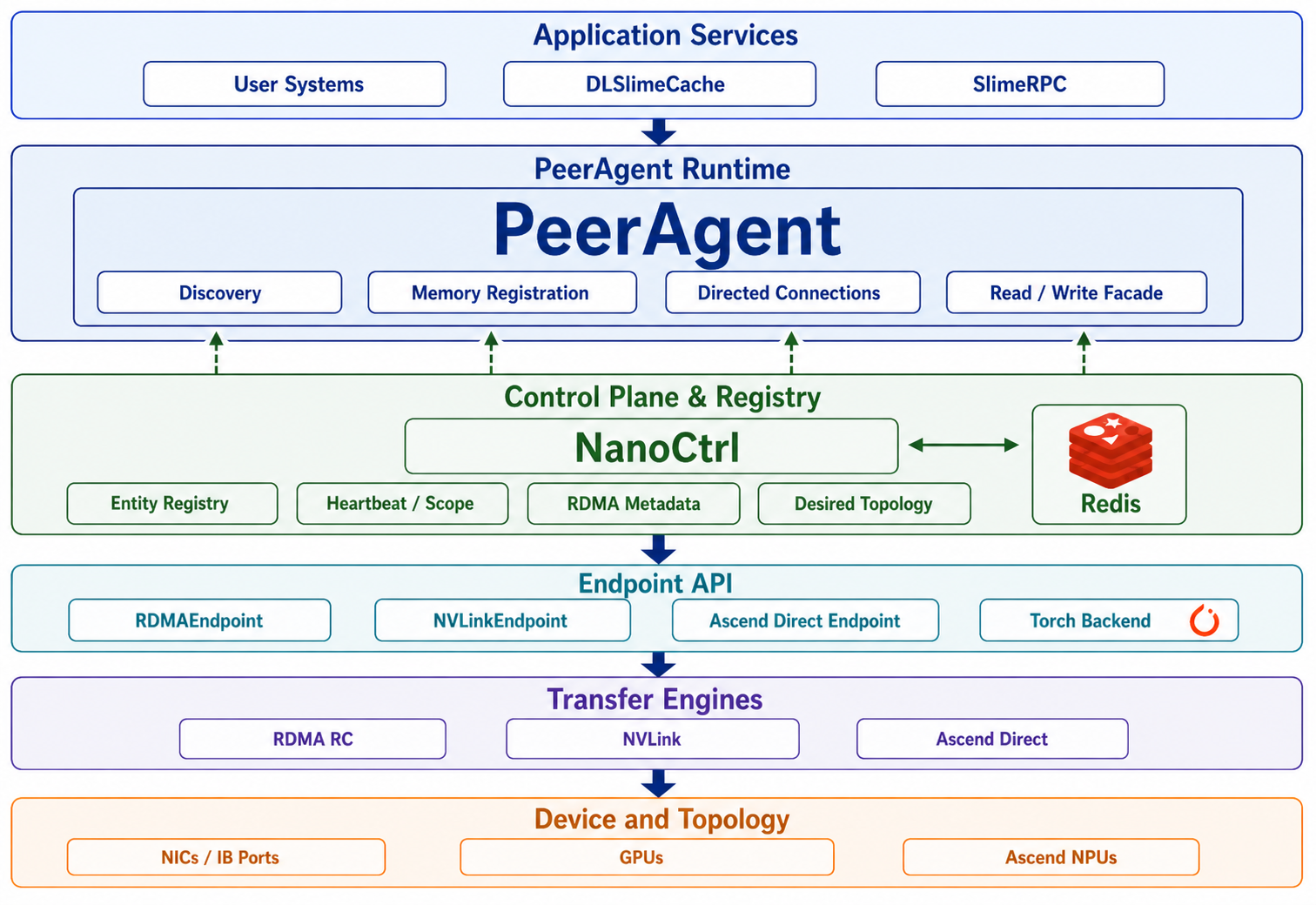
How The Layers Work Together
- A service starts and registers itself with NanoCtrl as a generic entity, for
example
kind=cacheorkind=rpc-worker. - Each service attaches to a PeerAgent instead of managing transport state directly.
- PeerAgents register their resource records and memory regions with NanoCtrl.
- Clients discover services by
kindand scope, then reach the service through its PeerAgent. - PeerAgents exchange connection intent and memory-region metadata through NanoCtrl and Redis.
- Endpoint objects issue the actual transfer through RDMA, NVLink, Ascend Direct, or the selected backend.
Usage Scenarios
Direct Endpoint Access
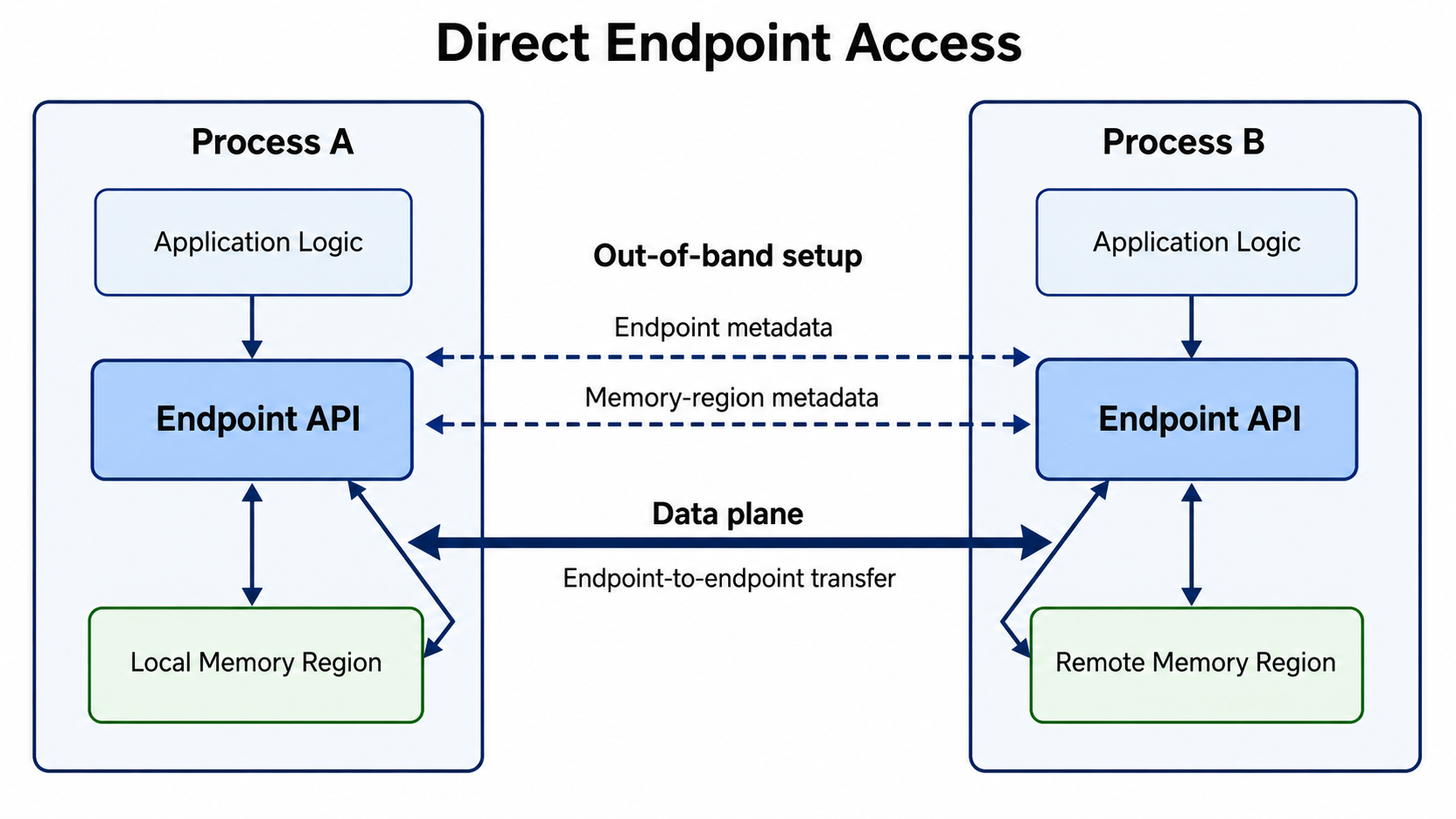
Use the Endpoint API directly when the application already controls peer placement, metadata exchange, and memory lifetime.
PeerAgent-to-PeerAgent Access
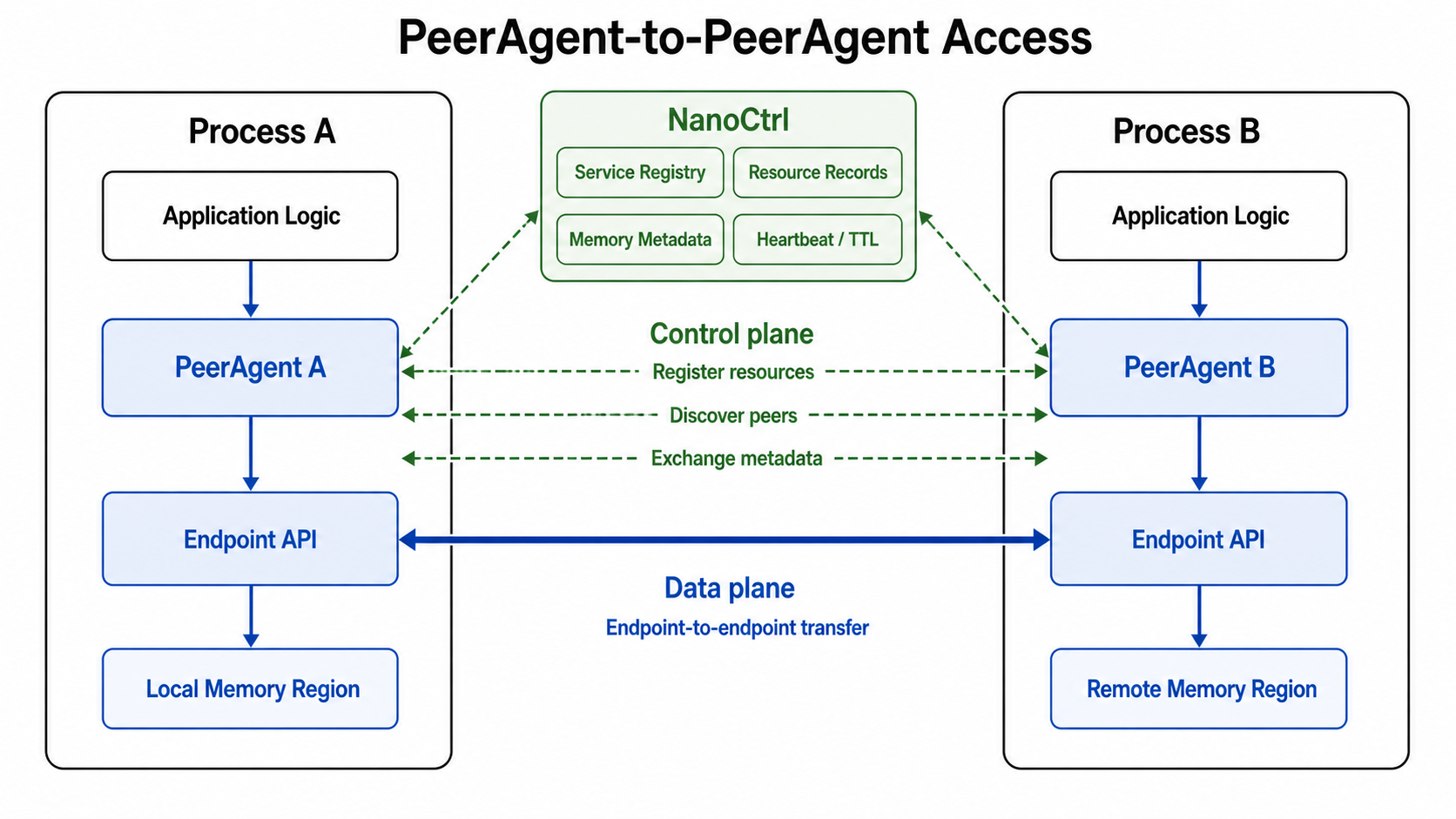
Use PeerAgent when the application wants peer-to-peer data movement without managing connection setup, memory-region discovery, and stale-state cleanup by itself.
DLSlimeCache Service
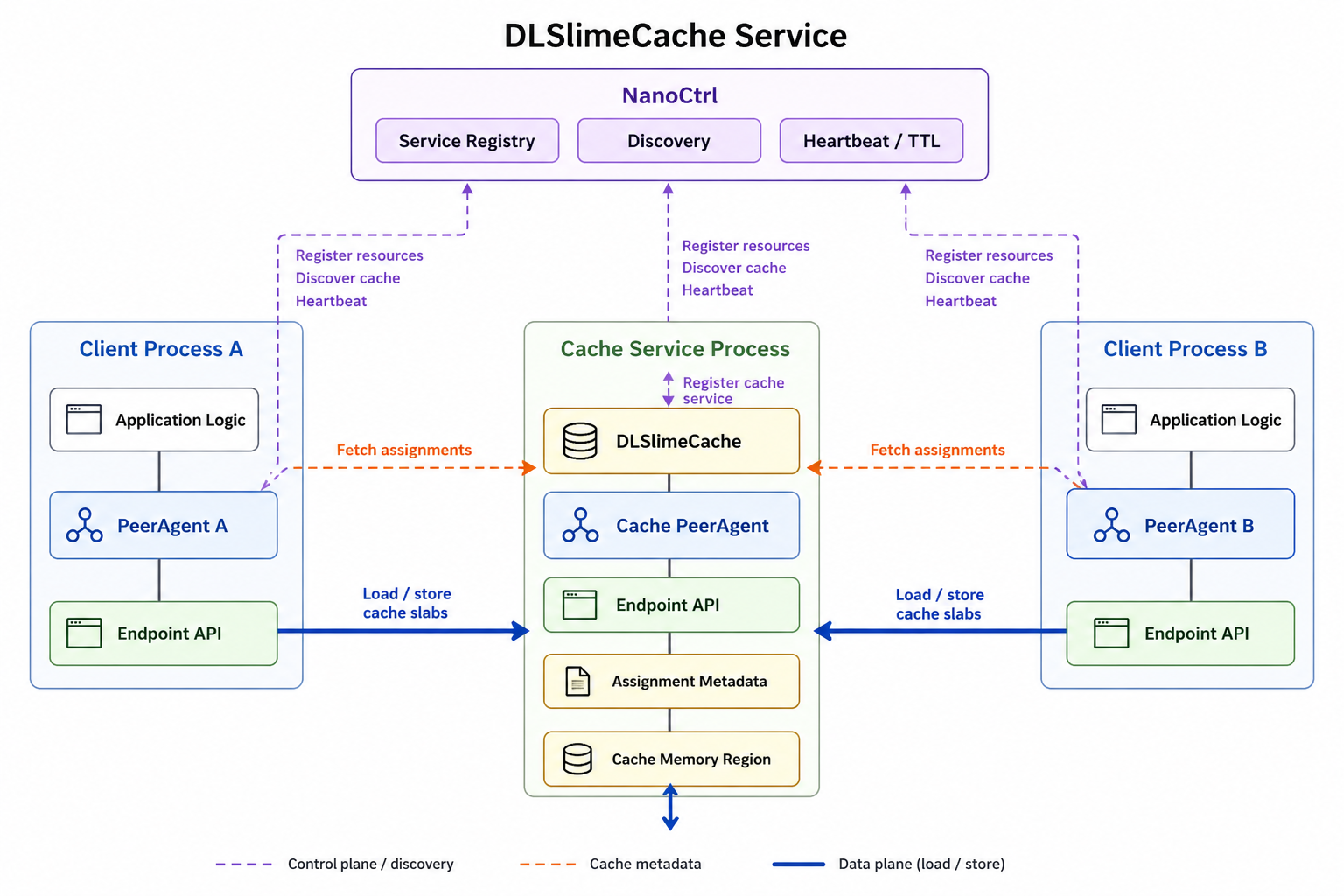
Use DLSlimeCache when multiple PeerAgent clients need a shared RDMA-backed cache service.
SlimeRPC Service
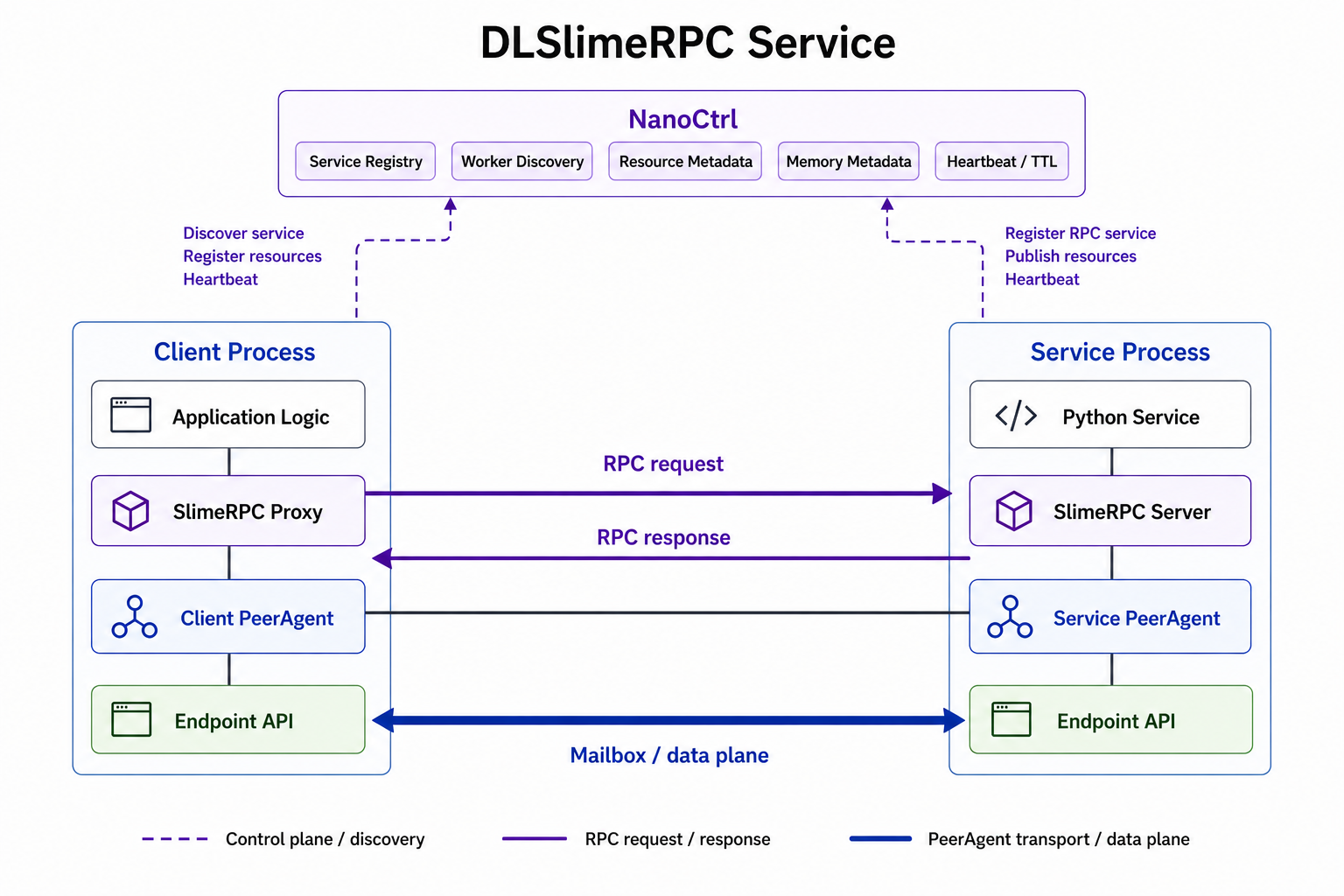
Use SlimeRPC when application logic should call a Python service while keeping transport and peer coordination inside DLSlime.
Disaggregated Inference Service
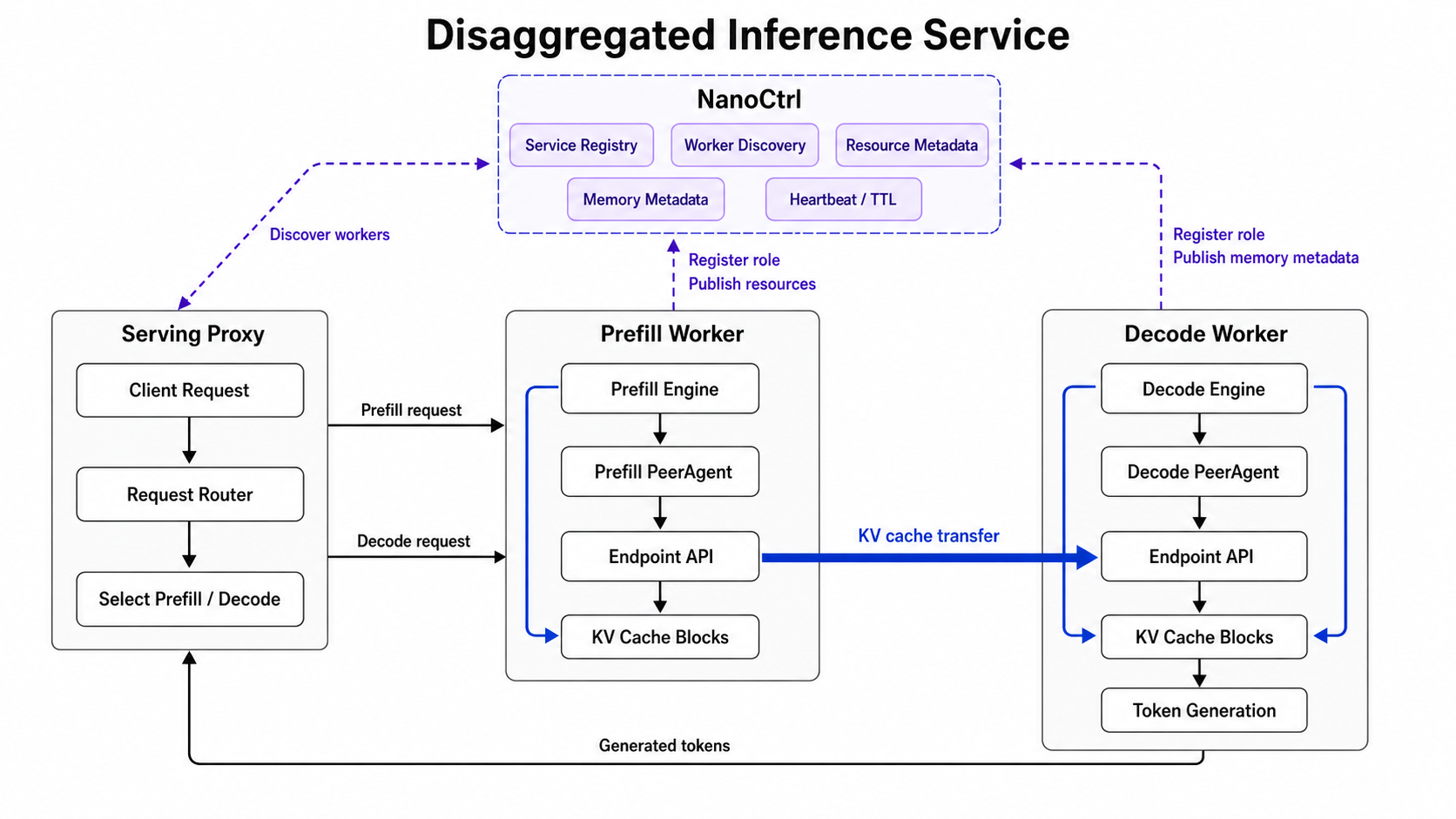
Use DLSlime for disaggregated inference when prefill and decode run as separate serving roles.